
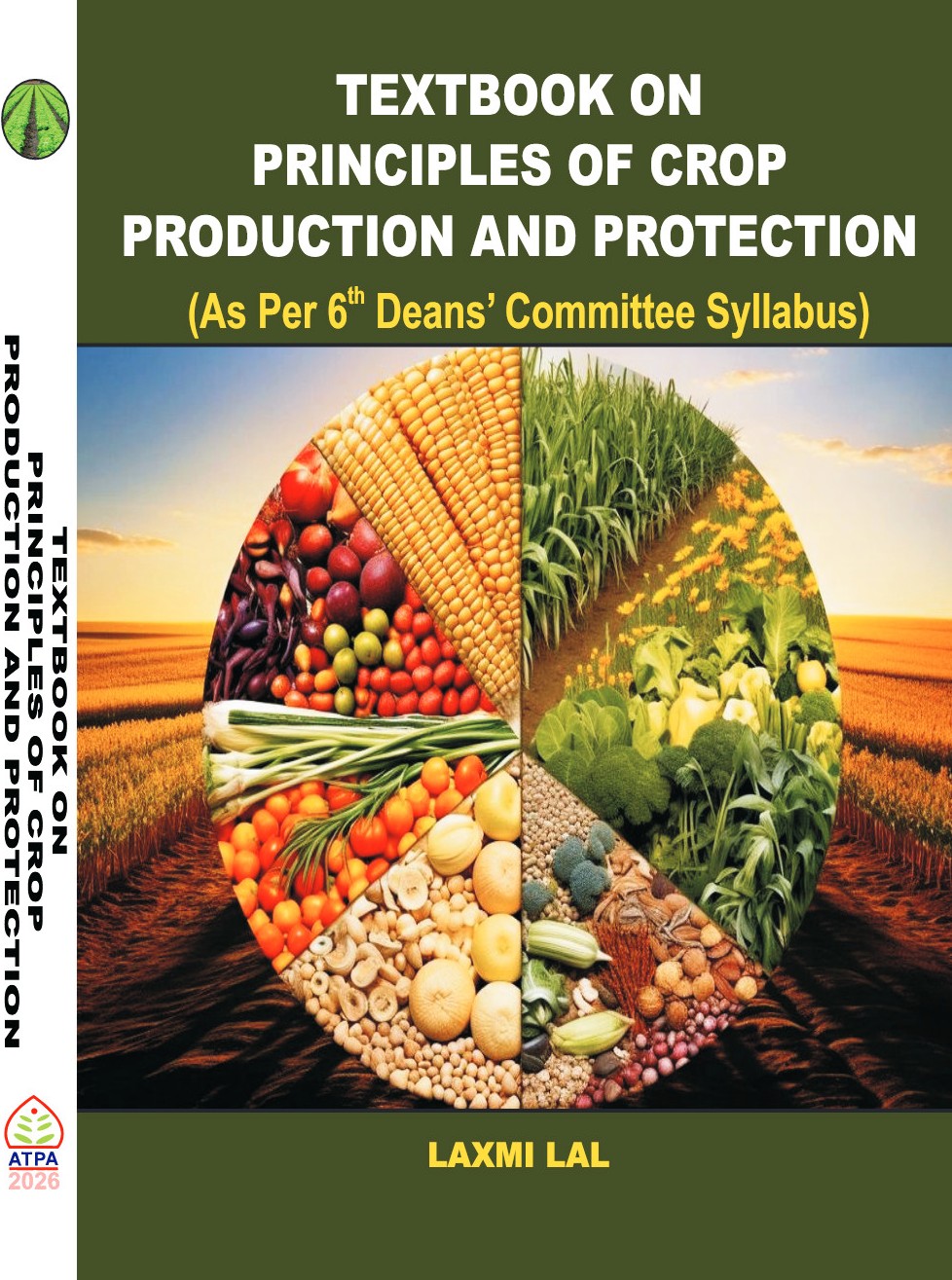
TEXTBOOK ON PRINCIPLES OF CROP PRODUCTION & PROTECTION
₹2,980.00
AUTHOR: LAXMI LAL
PUBLISHING YEAR: 2026
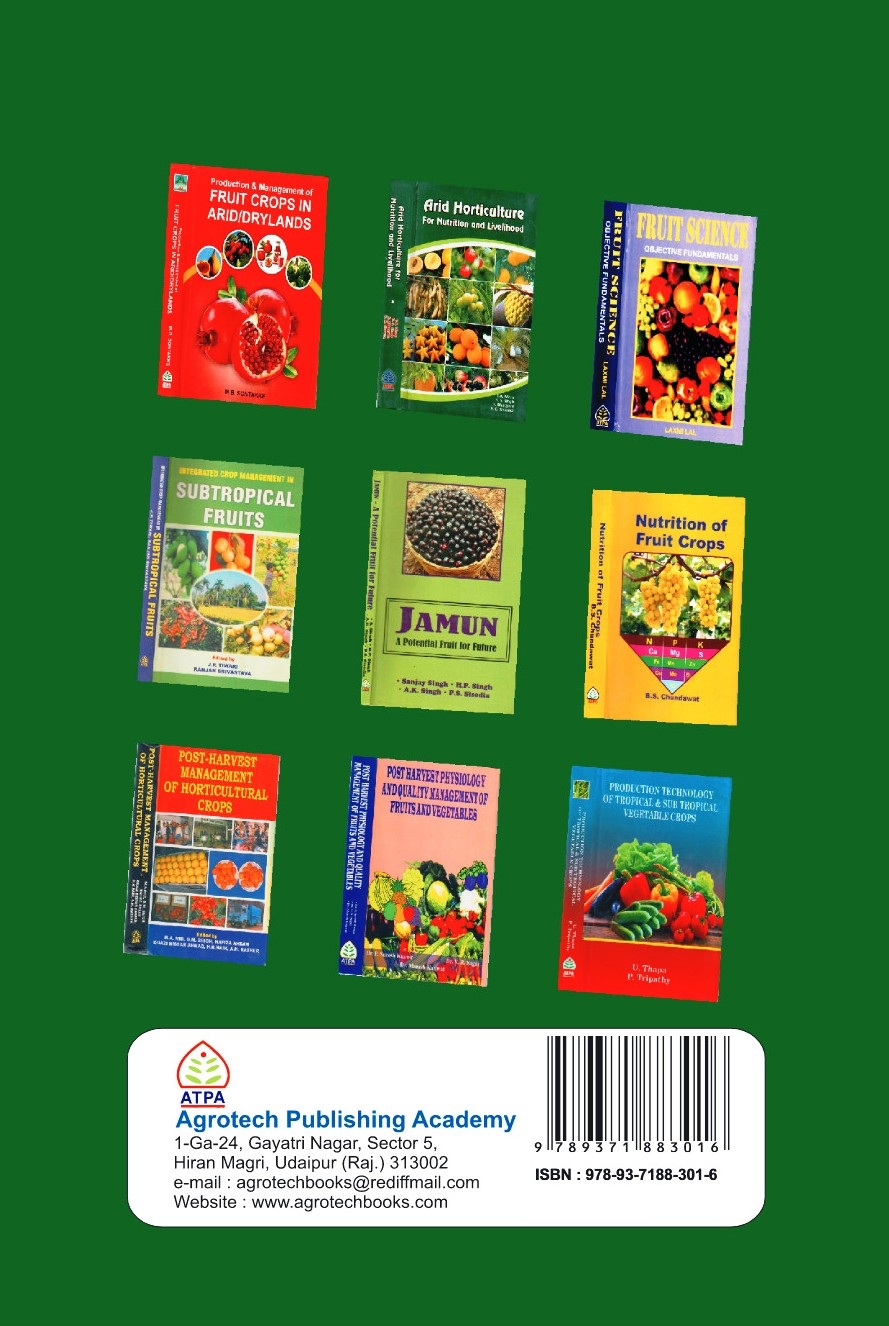
ISBN: 9789371883016
@ALL RIGHT RESERVED
Description
ABOUT THE BOOK
This book comprises of three basic areas of agriculture viz. Agronomty, Soil Science & Horticulture as Recommended by 6th Deans’ Committee of ICAR.
Very often we ignore or miss the basic knowledge or information on which the multi-storeyed, multidisciplinary approach of crop production stands. It is strenuous strive to keep pace with the progress of such a vast subject like crop production which is in practice throughout the world. Efforts have been made in this textbook to collet and collate new concepts of agronomy, soil science & horticulture into a somewhat single unit understandable to the undergraduate students and useful as a remedial course to the workers and scientist of agriculture and allied disciplines.
The first part of the text contains basic concepts and scope of agronomy, classification of crops, sowing and planting, crop growth and development, tilth and tillage, nutrient management, weed management, irrigation and water management, organic farming, crop rotations and cropping systems concisely dealt in separate chapters.
A good agronomist must be knowledgeable about the soil in which crops are grown while a good soil scientist must be well groomed in the agronomy of crops. Second part of this book is meant to provide essential information for those who want to acquire knowledge about soils and how to use and manage them. This section of book begins with some fundamental soil concepts such as the definition of soil, origin and development of soils, uses of soils in general and weathering and soil forming factors. Later chapters deal with soil physical properties and soil organic matter, essential plant nutrients, inorganic fertilisers, amendments requirement of soils, liquid fertilisers, etc along with factors controlling soil fertility such as soil organic matter, soil reaction, soil colloids and cation exchange capacity have beedn described.
Looking to the importance of horticulture in nutritional and economic security of the country this book incorporates PRINCIPLES OF HORTICULTURE at UG level to train our graduates about the fundamentals of horticulture. This part will equip students with knowledge and skills in the field of Horticulture.
The book will be very helpful for B.Sc. Agriculture students throughout the country as it covers nearby the entire syllabus for Agronomy and Horticulture courses framed by ICAR as suggested by 6th Dean’s Committee.
CONTENTS
| S. No. | Title | Page |
| Preface | 3-6 | |
| About The Book | 9 | |
| About The Author | 10 | |
| CHAPTER | ||
| PART-1 (AGRONOMY) | ||
| 1. | Introduction and Scope of Agronomy | 13-22 |
| 2. | Classification of Crop Plants | 23-33 |
| 3. | Effect of Different Weather Parameters on Crop Growth and Development | 34-46 |
| 4. | Tilth and its Characteristics | 47-70 |
| 5. | Crop Seasons | 71-73 |
| 6. | Methods, Time and Depth of Sowing | 74-109 |
| 7. | Method and Time of Application of Manures & Fertilisers | 110-136 |
| 8. | Fertigation | 137-152 |
| 9. | Natural Farming, Organic Farming & Sustainable Agriculture | 153-171 |
| 10. | Soil-Water-Plant Relationship | 172-193 |
| 11. | Crop Coefficients | 194-202 |
| 12. | Water Requirement of Crops & Criticalstages For Irrigation | 203-204 |
| 13. | Weeds and Their Control | 205-236 |
| 14. | Crop Rotations and cropping systems | 237-248 |
| LITERATURE CITED | 249-250 | |
| PART – II: SOIL SCIENCE | ||
| 15. | Soil Formating Process | 253-269 |
| 16. | Classification and Composition of Soil | 270-273 |
| 17. | Soil Taxonomy Order | 274-280 |
| 18. | Soil Physical Properties: Soil Texture | 281-295 |
| 19. | Soil Inorganic Colloids | 296-305 |
| 20. | Ion Exchange in Soil and Nutrient Availability | 306-318 |
| 21. | Soil Organic Matter | 319-327 |
| 22. | Soil Reaction | 328-340 |
| 23. | Quality of Irrigation Water | 341-346 |
| 24. | Essential Plant Nutrients | 347-356 |
| 25. | Important Inorganic Fertilisers | 357-363 |
| 26. | Fertilizers Reactions in Soils | 364-368 |
| 27. | Gypsum Requirement Of Sodic Soils And Neutralising R.S.C. | 369-372 |
| 28. | Liquid Fertilisers & Their Solubility & Compatibility | 373-382 |
| LITERATURE CITED | 383-384 | |
| PART – III : HORTICULTURE | ||
| 29. | TYPES OF Of Horticultural Crops | 387-394 |
| 30. | Sowing And Planting Times And Methods | 395-400 |
| 31. | Seed Rate And Seed Treatment | 401-414 |
| 32. | Macro Propagation Methods | 415-421 |
| 33. | Micro Propagation Methods | 422-428 |
| 34. | Plant Growing Structures | 429-436 |
| 35. | Pruning and training | 437-445 |
| 36. | Water Requirements & Critical Stages & Crop Growth | 446-464 |
| 37. | Management of Orchard | 465-477 |
| 38. | Pests And Diseases Management | 478-482 |
| LITERATURE CITED | 483-484 | |
ABOUT THE AUTHOR
Dr. Laxmi Lal, Retired Director Resident Instructions, MPUAT, Udaipur has many papers published in national and International Journals / Symposia, etc. and many number of books to his credit in different disciplines of Agriculture. He held different position in MPUAT and has spreaded highly innovative ideas and programmes for the development of Agriculture.
Additional information
| AUTHOR/AUTHORS | LAXMI LAL |
|---|---|
| PAGES | 484 |
| BINDING | Hard Back |
| PUBLICATION YEAR | 2026 |
Related products
-
-
MEAT PROCESSING AND TECHNOLOGY
- ₹3,500.00
-
-
-
A PRACTICAL GUIDE TO FOOD PRESERVATION
- ₹1,980.00
-
-
-
CLIMATE RESILIENT AGRICULTURE
- ₹3,500.00
-