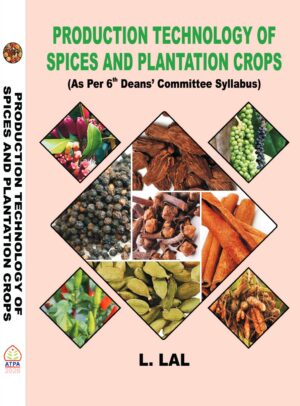
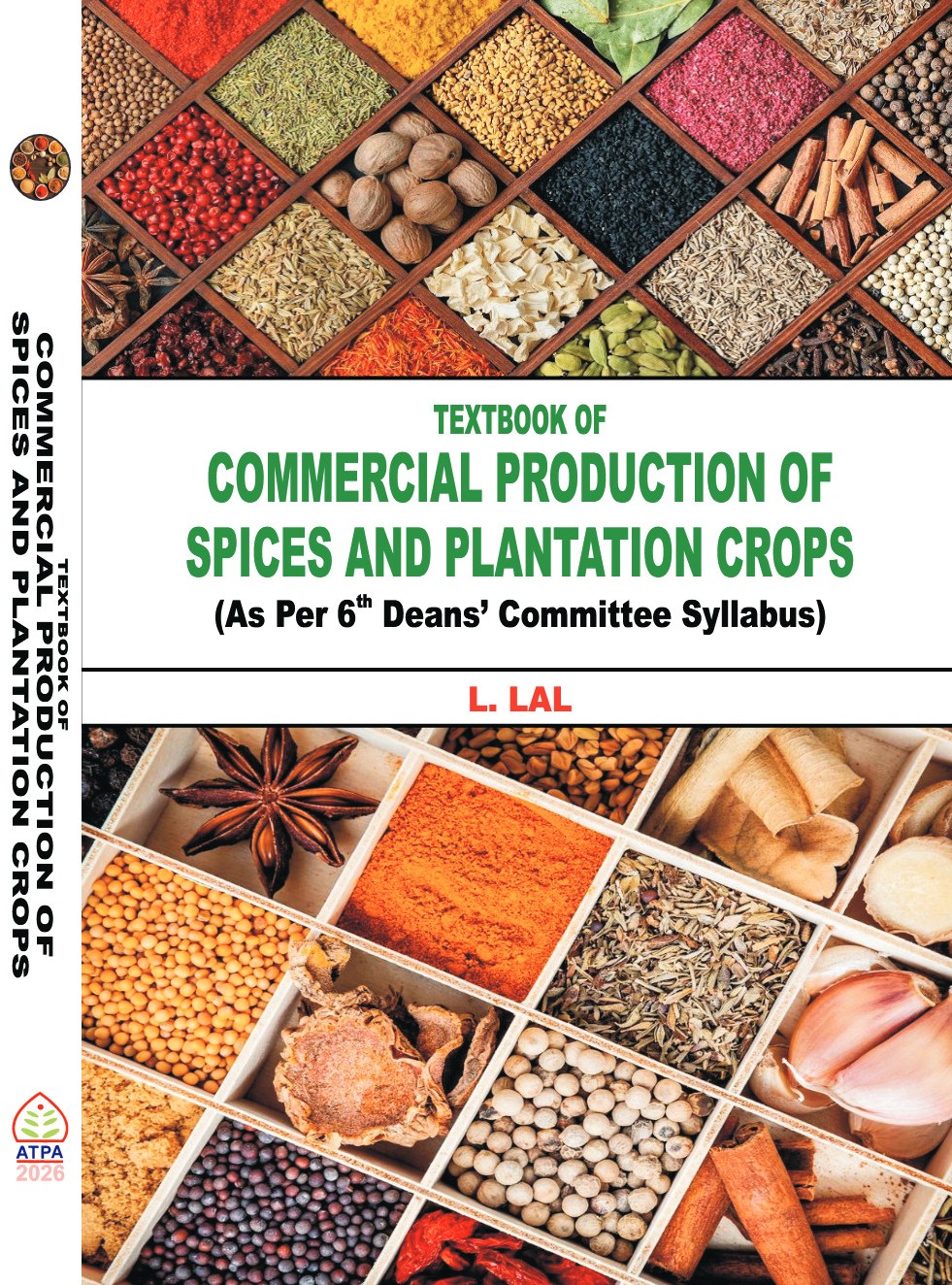
TEXTBOOK OF COMMERCIAL PRODUCTION OF SPICES & PLANTATION CROPS
₹2,980.00
AUTHOR: L. LAL
PUBLISHING YEAR: 2026
ISBN: 9789371881562
@ALL RIGHT RESERVED
Description
ABOUT THE BOOK
The significance of spices crops has been known since time immemorial in India. The India is known as home of spices, producing a variety of spices. Out of the recorded 109 spices, about 63 spices are cultivated in the country. In the recent past, the spice plants have gained importance worldwide. Spices contribute about 8.5 per cent of India’s export earnings from agricultural and allied products and 1.24 per cent of the total export earnings. India’s share in the world spices market is estimated as 46 per cent by volume and 27 per cent by value.
Looking to the importance and utility of these crops the book entitled “Production Technology of Spices Plants” is being proposed which will be useful for the under-graduate students of Agriculture as well as Horticulture of all the SAUs as it has been organised to incorporate the entire syllabi recommended by 5th dean’s committee of ICAR. I hope that this effort shall benefit not only students of Agriculture/Horticulture but also those who are involved in the production and promotion of plantation crops, spices plants. This book includes information regarding package of practices of spices plants based on the personal experience, available research and reports from various seminars/ conferences/ workshop on these crops. The book is expected to meet the requirements of course recommended by the 6th Dean’s Committee of ICAR
The vast area and the varied agro-climatic conditions of India ranging from tropical to temperate make it possible to grow almost all the different kinds of plantation and other horticultural crops. Plantation crops, play an important role in our country’s economy by earning valuable foreign exchange, providing direct and indirect employment to many people and also by supporting a number of hotrticultural based industries. The book has been planned to meet the requirements of UG students of agricultute and horticulture streams meeting the requirement as per 6th Dean’s committee syllabi. The book contains production technology of promising ten important plantation crops with each topic so arranged and constructed as to provide the complete details on their cultivation practices. Details on botanical description, cultivars, method of propagation, crop production, crop protection and post harvest handling and chemical composition has been given for all the plantation crops. The book has been written in simple language with adequate number of diagrams. This book will be very useful to the students of SAUs in the county. The book will also serve as a handbook or reference book to the extension personnel of the state Agricultural, Horticulrtural and Forestry departments.
CONTENTS
| S. No. | Title | page |
| Preface | 5-6 | |
| About The Author | 6 | |
| About The Book | 7 | |
| Literature Cited | 8 | |
| SPICE CROPS | ||
| 1. | Importance, Scope And Present Status Of Spice | 9-14 |
| 2. | Classification Of Spices | 15-20 |
| 3. | Black Pepper | 21-31 |
| 4. | Large Cardamom | 32-40 |
| 5. | Small Cardamom | 41-52 |
| 6. | Bishop’s Weed (Ajwain) | 53-57 |
| 7. | Coriander | 58-66 |
| 8. | Cumin | 67-73 |
| 9. | Dill (Sowa) | 74-78 |
| 10. | Fennel | 79-85 |
| 11. | Fenugreek | 86-95 |
| 12. | Ginger | 96-104 |
| 13. | Turmeric | 105-112 |
| 14. | Garlic | 113-119 |
| 15. | Cinnamon | 120-125 |
| 16. | Clove | 126-133 |
| 17. | Vanila | 134-139 |
| 18. | Betelvine | 140-151 |
|
19. |
Celery | 152-157 |
|
20. |
Plantation Crops | 158-161 |
| 21. | Scope & Economic Importance | 162-163 |
| 22. | Arecanut | 164-186 |
| 23. | Coconut | 187-229 |
| 24. | Cashew | 230-251 |
| 25. | Tea | 252-284 |
| 26. | Coffee | 285-314 |
| 27. | Rubber | 315-332 |
| 28. | Cocoa | 333-367 |
| 29. | Oil Palm | 368-398 |
| 30. | Date Palm | 399-404 |
| 31. | Palmyrah Palm | 405-418 |
| 32. | Cinhona | 419-429 |
| 33. | Objective Question Bank | 430-438 |
| Appendix | 439-444 |
ABOUT THE AUTHOR
L. Lal Somani is Retired Director Resident instructions, MPUAT, Udaipur. He has over 400 research and technical articles to his credit. He has authored/edited over 150 scholarly books in various field of Agriculture. Prof. Somani has been honored with several academic excellence awards for his outstanding achievements.
Additional information
| AUTHOR/AUTHORS | L. LAL |
|---|---|
| PAGES | 444 |
| BINDING | Hard Back |
| PUBLICATION YEAR | 2026 |
Related products
-
-
TEXTBOOK OF SPICES AND CONDIMENTS
- ₹1,980.00
-