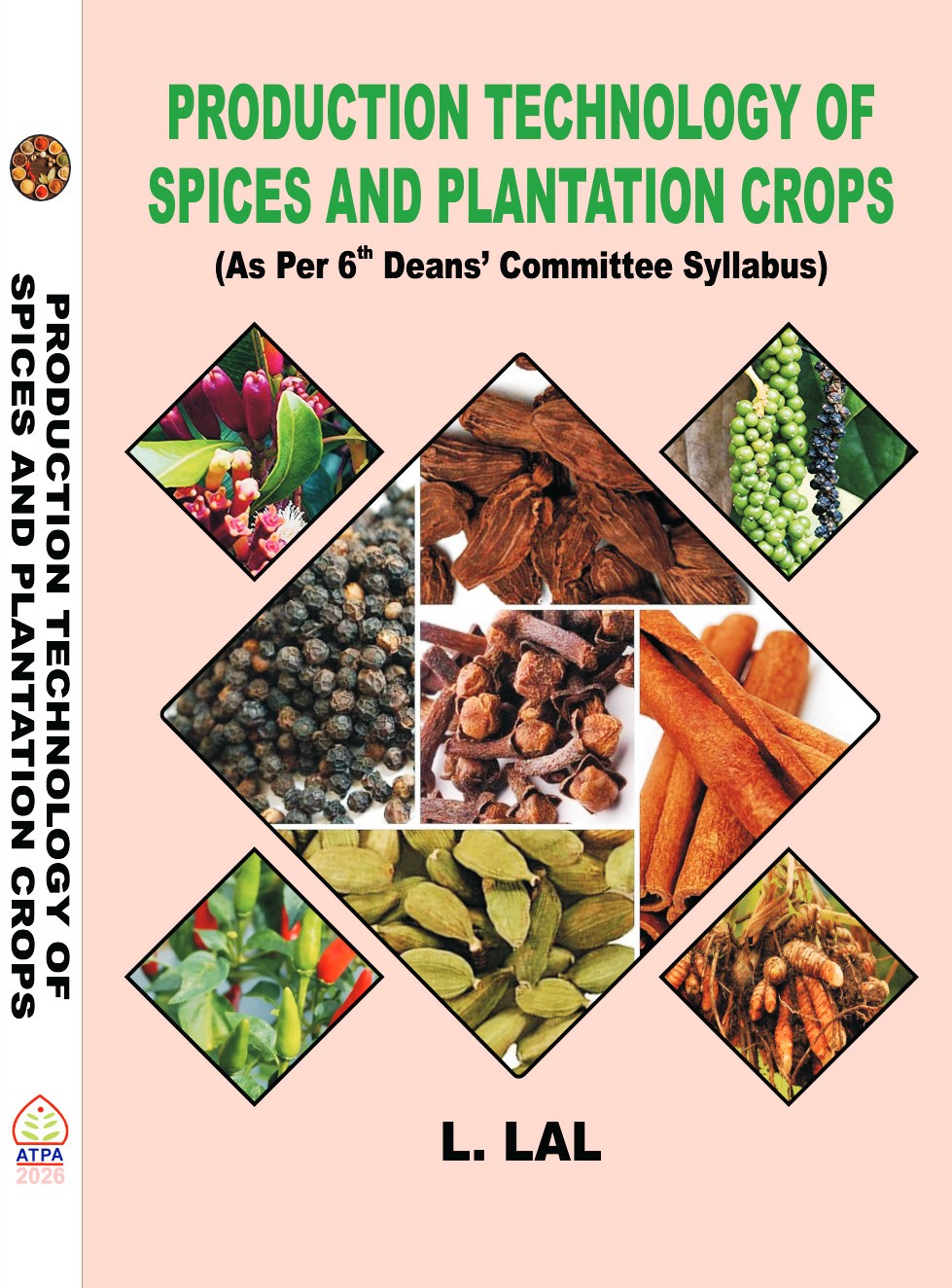
PRODUCTION TECHNOLOGY OF SPICES AND PLANTATION CROPS
₹1,980.00
AUTHOR: L. LAL
PUBLISHING YEAR: 2026
ISBN: 978-93-7188-992-6
@ALL RIGHT RESERVED
Description
ABOUT THE BOOK
The significance of plantation crops, spices, aromatic and medicinal plants have been well known since time immemorial in India. The India is known as home of spices, producing a variety of spices. Out of the recorded 109 spices, about 60 spices are cultivated in the country. In the recent past, the aromatic and medicinal plants have gained importance worldwide.
Looking to the importance and utility of these crops the book entitled Production Technology of Plantation crops and Spices Plants is being proposed which is useful for the under-graduate students of Agriculture as well as Horticulture. Hopefully this effort shall benefit not only students of Agriculture/Horticulture but those who are involved in the production and promotion of plantation crops and spices plants. This books includes information regarding package of practices of plantation crops and based on the personal experience, available research and reports from various seminars/conferences/
workshop on these crops. The content of this book is classified in two sections namely Plantation crops and Spices plants meeting the entire requirement of the syllabus recommended by the 6th deans’ committee of ICAR. The first section includes importance, classification and package of practices of spices viz; Blackpepper, Cardamom (small and large), Garlic, Turmeric, Coriander, Fennel, Ajwain, clove , celery,betelvine and Vanila.The second section deals with production technology of some of the important plantation crops like Coconut, Arecanut, Cashew,cocoa, arecanut, Tea, Coffe and Rubber.
CONTENTS
| S. No. | Title | Page |
| PREFACE | 3-4 | |
| ABOUT THE AUTHOR | 5 | |
| ABOUT THE BOOK | 5 | |
| CHAPTERS | ||
| A. SPICE CROPS | ||
| 1 | Importance, Scope and Present Status of Spices | 7-11 |
| 2 | Classification of Spices | 12-15 |
| 3 | Black Pepper | 16-25 |
| 4 | Large Cardamom | 26-33 |
| 5 | Small Cardamom | 34-43 |
| 6 | Bishop’s Weed {Ajwain) | 44-48 |
| 7 | Coriander | 49-57 |
| 8 | Cumin | 58-64 |
| 9 | Clove | 65-72 |
| 10 | Fennel | 73-79 |
| 11 | Fenugreek | 80-86 |
| 12 | Garlic | 87-93 |
| 13 | Ginger | 94-101 |
| 14 | Turmeric | 102-109 |
| 15 | Celery | 110-115 |
| 16 | Vanilla | 116-122 |
| 17 | Cinnamon | 123-128 |
| 18 | Betelvine | 129-135 |
| B. PLANTATION CROPS | ||
| 19 | Introduction to Plantation Crops | 136-140 |
| 20 | Coconut | 141-151 |
| 21 | Arecanut | 152-161 |
| 22 | Cashew nut | 162-169 |
| 23 | Tea | 170-185 |
| 24 | Coffee | 186-194 |
| 25 | Rubber | 195-200 |
| 26 | Cocoa | 201-235 |
| 27 | Oil Palm | 236-257 |
| 28 | Glossary | 258-260 |
ABOUT THE AUTHOR
L. Lal (Somani) is Retired Director Resident Instructions, MPUAT, Udaipur. He has over 400 research and technical articles to his credit. He has authored/edited over 150 scholarly books in various field of agriculture. Prof. Somani has been honored with several academic excellence awards for his outstanding achievements
Additional information
| AUTHOR/AUTHORS | L. LAL |
|---|---|
| PAGES | 260 |
| BINDING | Hard Back |
| PUBLICATION YEAR | 2026 |
Related products
-
-
TEXTBOOK OF SPICES AND CONDIMENTS
- ₹1,980.00
-