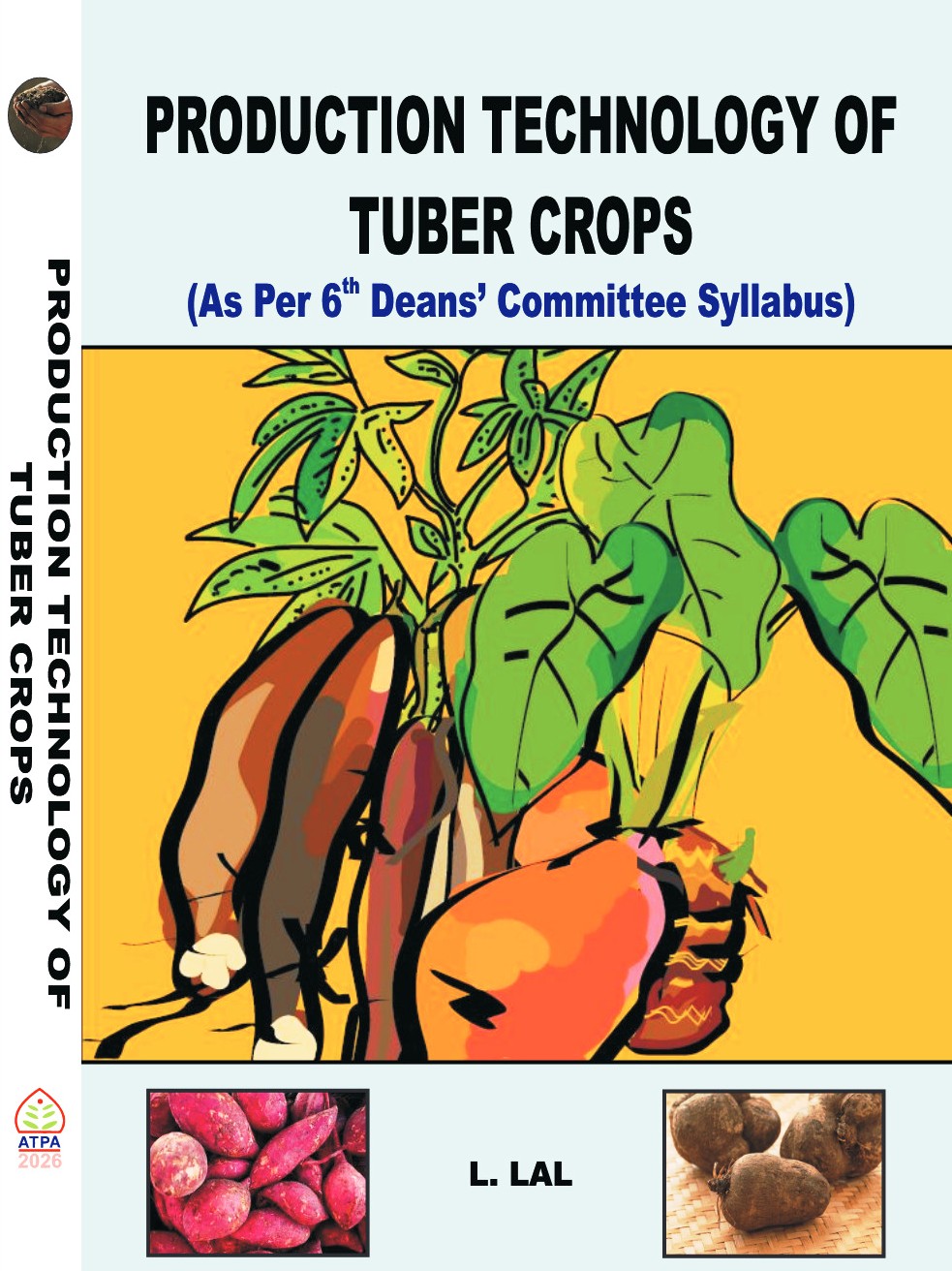
PRODUCTION TECHNOLOGY OF TUBER CROPS
₹980.00
AUTHOR: L. LAL
PUBLISHING YEAR: 2026
ISBN: 9789371881463
@ALL RIGHT RESERVED
Description
ABOUT THE BOOK
In the context of climate change, tuber crops, rich in calories and nutrients, have immense scope to become the future crop for combating poverty, hunger and malnutrition. In view of the climate resilience, better performance in marginal and degraded soils, high biological efficiency, high dietary energy and micronutrient contents, tuber crops have great potential to combat the future food requirements to feed the ever-growing population and to meet the malnutrition among the resource poor people.
Besides being rich sources of carbohydrates, most of these crops are rich in minerals such as calcium and phosphorus as well as vitamins, especially vitamin C. Potassium is the major mineral in most root crops while sodium tends to be low. This makes them particularly valuable in the diet of patients with high blood pressure, who have to restrict their sodium intake. All these crops also have very low lipid contents. The orange and yellow fleshed tuber and green leaves are good sources of beta carotene, which can prevent night blindness and malnutrition. Some of the tuber crops like elephant foot yam, Curcuma sp. and Chinese potato have medicinal properties. In contrast to tubers, the leaves of tuber crops are very rich in protein.
The leaves contain good amounts of micronutrients such as iron, calcium and vitamins. The leaves contain a substantial amount of b-carotene that could contribute significantly to the daily requirement of vitamin A, especially for children. Some of the tuber crops contain anti-nutritional factors, which can be effectively removed by resorting to proper processing techniques.
In this book, the production technology of different tuber crops (major and minor tuber crops) are discussed for the benefit of UG students of all the SAUs and agricultural colleges in India as it covers the entire syllabus recommended by the 6th Deans committee of ICAR.
CONTENT
| S.NO. | TITLE | PAGE |
| PREFACE | 3-4 | |
| SYLLABUS | 4 | |
| SUGGESTED READINGS | 6 | |
| ABOUT THE BOOK | 7 | |
| CHAPTERS | ||
| 1 | Sweet Potato, | 9-15 |
| 2 | Arrow Root | 16-22 |
| 3 | Cassava | 23-31 |
| 4 | Colocasia, | 32-34 |
| 5 | Xanthosoma | 35-44 |
| 6 | Potato | 45-53 |
| 7 | Amorphophallus | 54-56 |
| 8 | Dioscorea (Medicinal Yam) | 57-61 |
| 9 | Jerusalem Artichoke | 62-67 |
| 10 | Horse Radish | 68-73 |
| 11 | Coleus | 74-78 |
| 12 | Yam Bean | 79-90 |
| 13 | Under Exploited Tuber | 91-93 |
| 14 | Elephant Foot Yam | 94-95 |
| 15 | Chinese Potato | 96-99 |
| 16 | Curcuma Spp. | 100-102 |
| Appendix-I, II | 103-104 | |
ABOUT THE AUTHOR
L. LAL (Somani) is Retired Director Resident Instructions, MPUAT, Udaipur. He has over 400 research and technical articles to his credit. He has authored/edited over 145 scholarly books in various field of agriculture. Prof. Somani has been honored with several academic excellence awards for his outstanding achievements.
Additional information
| AUTHOR/AUTHORS | L. LAL |
|---|---|
| PAGES | 104 |
| BINDING | Hard Back |
| PUBLICATION YEAR | 2026 |
Related products
-
-
SOIL, WATER AND AIR POLLUTION
- ₹1,500.00
-