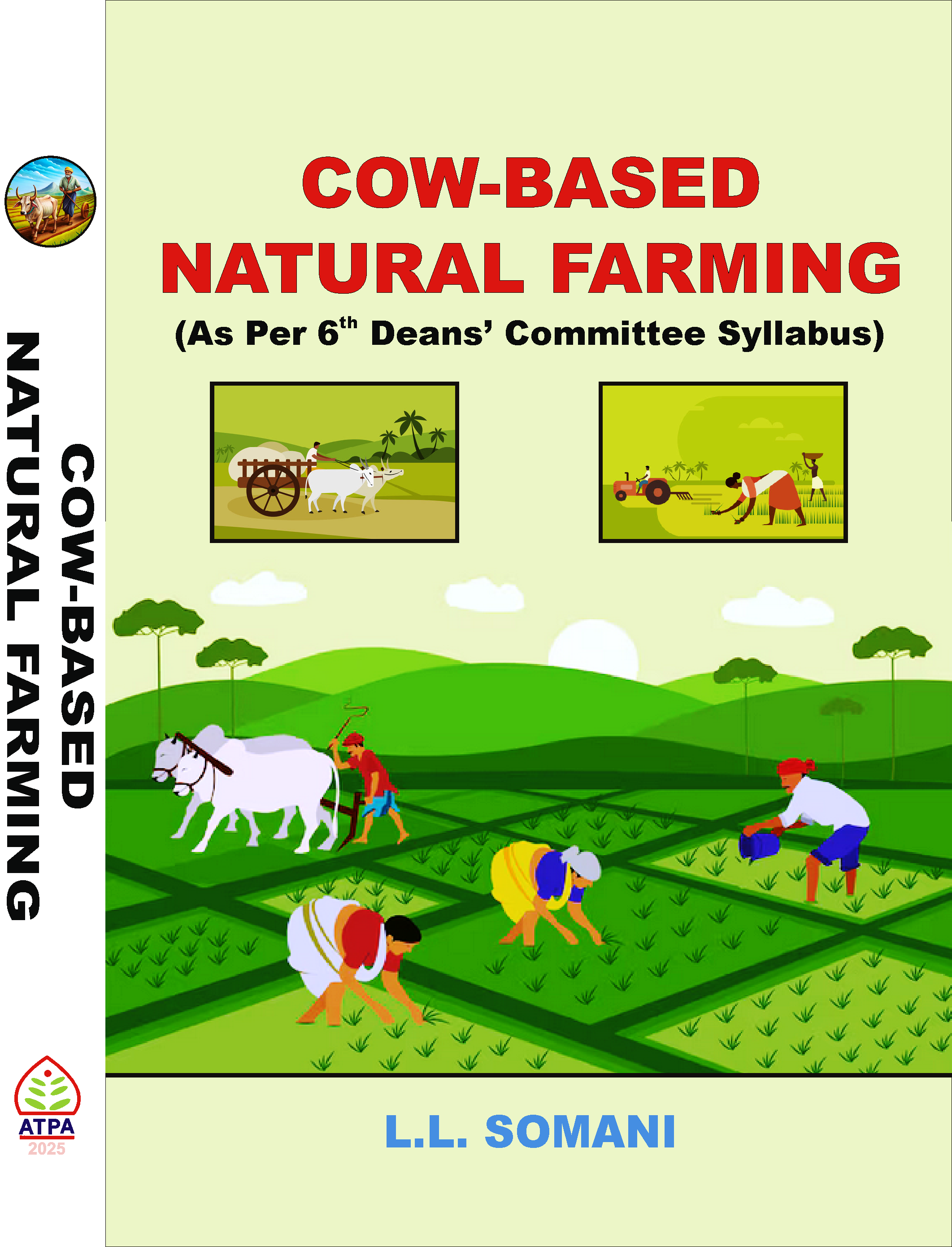
COW-BASED NATURAL FARMING
₹1,980.00
AUTHORS: L.L. SOMANI
PUBLISHING YEAR: 2025
ISBN: 9788119892365
@ALL RIGHT RESERVED
Description
ABOUT THE BOOK
The term biodynamic is taken from the Greek words bios meaning life and dynamic meaning energy. Hence biodynamic farming refers to “working with the energies which create and maintain life.” Biodynamic is thus a science of life forces, a recognition of the basic principles at work in nature and an approach to agriculture which takes these principles into account to bring about balance and healing. It was concern about worrying trends developing in agriculture that led farmers to ask Rudolf Steiner to give his ‘Agriculture’ lectures in 1924, on which the biodynamic agriculture movement is founded.
Biodynamic farming is systematic and synergistic way of harnessing energies from cosmos, mother earth, plants and cow for quality production and proper maintenance of ecosystem. Biodynamic preparations are components of biodynamic farming to restore the soil and the organic matter in the form of humus, increasing microbial population, skillful application of factors contributing to soil life and health, treating manure and compost in biodynamic way.
Biodynamics is an advanced organic method in which no artificial fertilizers or chemical sprays are used. The plant is influenced not just by the soil in which it grows, but by the water in the soil and theatmosphere, other plants nearby, the air around it, the amount of light and warmth it receives from the sun, and also the influences coming from other cosmic bodies, the moon, the sun, planets and stars and the entire cosmos.
A central aspect of biodynamics is that the farm as a whole is seen as an organism, and therefore should be a self-nourishing system in which humans as well as plants and animals play an integral role. The holistic system approach of biodynamics requires integrated management practices – such as crop rotation, composting, incorporation of animals, soil management and the application of biodynamic preparations – to promote and maintain soil health.
A basic ecological principle of biodynamics is to conceive the farm as an organism, a self-contained entity. A farm is said to have its own individuality. Emphasis is placed on the integration of crops
and livestock, recycling of nutrients, maintenance of soil and its health and well being of crops and animals, the farmer too is a part of the whole. Thinking about the interactions within the farm ecosystem naturally leads to a series of holistic management practices that address the environmental, social and financial aspects of the farm and the farmer. On biodynamic farm we seek to enhance the soil structure and nutrient cycle as well as plant growth and development with the use of specific preparations which are ijade from farm sourced materials.
Pest and diseases control is generally managed by developing the farm as a total organism by making use of specific products made out of weeds and pests themselves on the farm itself. Most of
these techniques include using the ashes of a pest or weed that has been trapped or picked from the fields and ceremonially burnt.
The book unfolds the mysteries of biodynamic farming to be useful to students, teachers, researchers, planners, practising farmers and for all those concerned with farming.
CONTENTS
| S. No. | Title | Page |
| About the Book | 3 | |
| About the Author | 5 | |
| Preamble | 6 | |
| CHAPTER | ||
| 1. | Biodynamic Farming At a Glance | 13 |
| 2. | Non-Chemical Methods of Farming | 17 |
| 3. | What is Biodynamics? | 21 |
| 4. | The Biodynamic Farming: A Holistic Approach to Organic Farming | 26 |
| 5. | History of Biodynamic Farmng | 37 |
| 6. | Need of Biodynamic Farming | 40 |
| 7. | Summary of Steiner’s Eight Lectures | 42 |
| 8. | Biodynamic Farming – The Movement | 46 |
| 9. | Principles of Biodynamic Farming | 49 |
| 10. | Organic Farming us. Biodynamic Farming | 51 |
| 11. | Biodynamic and Conventional Farming | 60 |
| 12. | The Farm as an Agricultural Individuality | 62 |
| 13. | Zodiac Principle of Biodyna mic | 65 |
| 14. | Biodynamic Planting Calendar and Lunar & Solar Rhythms | 70 |
| 15. | Biodynamic Preparations | 87 |
| 16. | Biodynamic Compost and Manures | 93 |
| 17. | Animal Husbandry in Biodynamic Agriculture | 111 |
| 18. | Soil Quality and Profitability | 116 |
| 19. | Pests and Weeds Management | 130 |
| 20. | Practical Points for Biodynamic Methods | 131 |
| 21. | Economics of Biodynamic Farming | 133 |
| 22. | Consequence: Importance of Cooperation | 145 |
| 23. | Research Achievements in Biodynamic Farming | 147 |
| 24. | Frequently Asked Questions | 161 |
| 25. | Developing Know How for Biodynamic Farming | 167 |
| 26. | Summary | 177 |
| 27. | Conclusions | 182 |
| Selected References | 194 | |
| Index | 206 | |
ABOUT THE AUTHOR
Prof. (Dr.) Laxmi Lai Somani (b. 1945) took his Phd.D. degree in 1974 from Sukhadia University, Udaipur. All through he holds a brilliant academic record securing distinction/honours. He went to waite Agricultural Research Institute, Adelaide, Australia for undertaking post doctoral work (1975-77). He has served the prestigious IFFCO chair (1990-2005). Dr. Somani superannuated from the position of Director of Resident Instructions in the Maharana Pratap University of Agriculture and Technology in October, 2005.
He has published 80 books and over 270 research/review/ technical articles in national and international Journals of repute. He has been honoured by university Merit Award, Dhiru Moraiji
Memorial Prize and Vijay Shree. The world development parliament also honoured him with honorary award DOCTOR OF SCIENCE.
Additional information
| AUTHOR/AUTHORS | L.L. Somani |
|---|---|
| PAGES | 208 |
| BINDING | Hard Back |
| PUBLICATION YEAR | 2025 |
Related products
-

-
CURRY LEAF
- ₹1,500.00
-